Doing Business in Ethiopia: The 2026 Investment Wave
20 August 2026 · 8 min read
# Doing Business in Ethiopia in 2026: The Sectors Driving the Next Investment Wave
Updated 20 August 2026 · 6 min read
Ethiopia's investment landscape is entering a new phase.
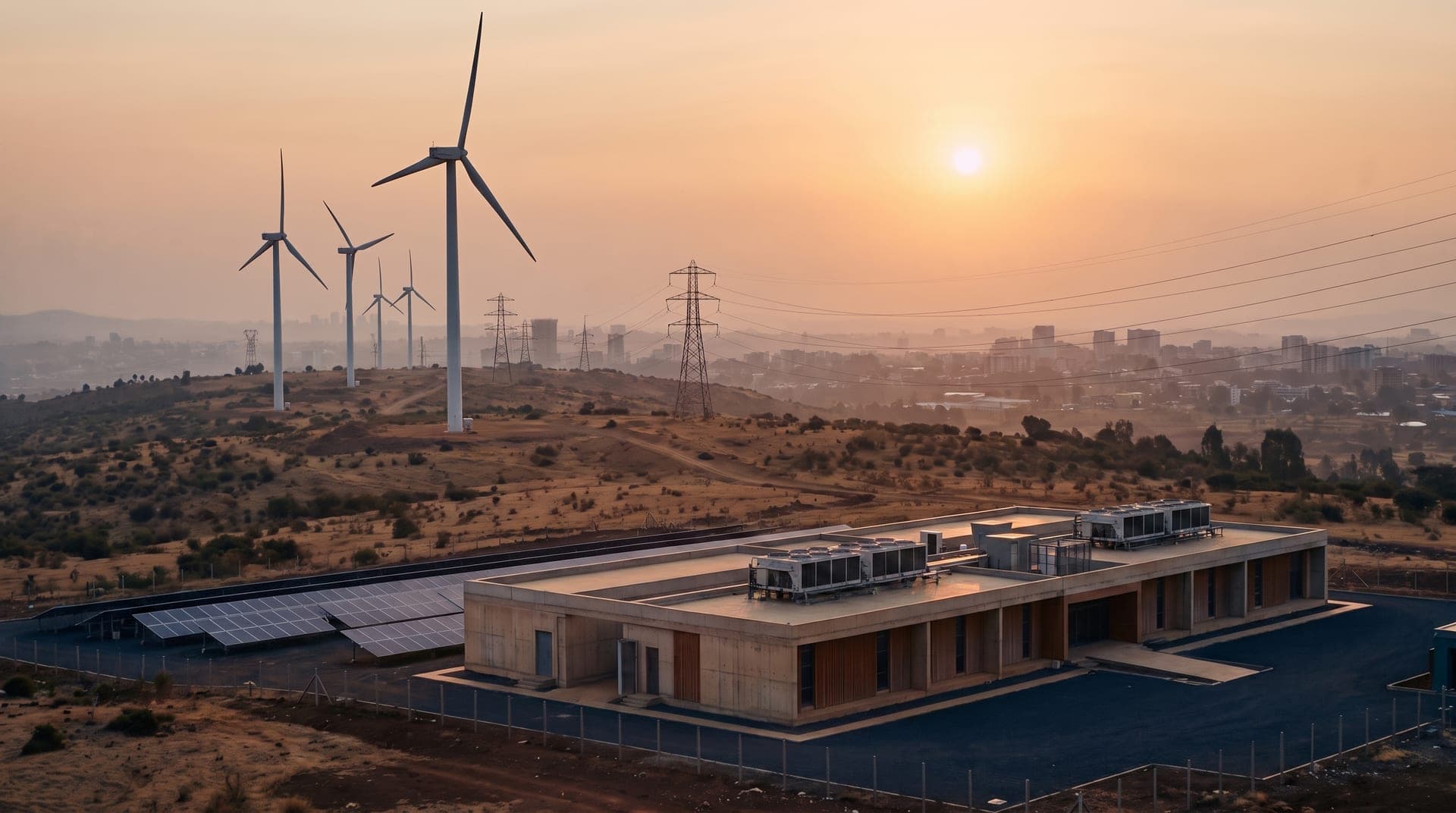
For years, foreign investment in the country was associated primarily with manufacturing, agriculture, industrial parks and major infrastructure projects. Those sectors remain important, but in 2026 some of the strongest government-backed investment priorities are increasingly concentrated around renewable energy, digital infrastructure, data centres, artificial intelligence, telecommunications and logistics.
The shift reflects a broader strategy: expand private participation, strengthen digital infrastructure and use Ethiopia's renewable-energy base to support the next generation of economic activity.
For international companies evaluating the market, the question is therefore becoming less about whether Ethiopia is changing and more about where that change is creating commercially relevant opportunities.
Renewable Energy Is Becoming a Foundation for New Investment
Energy is central to Ethiopia's current development strategy.
The country has substantial hydropower resources together with significant wind, solar and geothermal potential. Government policy increasingly encourages private participation in expanding generation capacity and diversifying the energy mix.
Recent projects illustrate the direction.
In July 2026, the African Development Bank approved financing for the Aysha Wind Project, a 300 MW development expected to become Ethiopia's first wind-based Independent Power Producer and its largest wind farm once completed.
The project is significant not only for the electricity sector.
Additional renewable generation can support industrial development, telecommunications infrastructure, data centres and other power-intensive businesses.
For investors, this makes Ethiopia's energy story increasingly connected to its technology story.
Data Centres Are Emerging as a Strategic Opportunity
The Ethiopian Investment Commission identifies data centres as an investment opportunity within Ethiopia's ICT sector.
The investment case combines several factors: a large domestic market, expanding digital adoption, available land and relatively competitive electricity and real-estate costs.
At the regulatory level, the Ethiopian Communications Authority already operates a dedicated Data Center Service Provider licensing framework.
This means data centres are not simply a future policy ambition. They are already recognized as a specific commercial activity within Ethiopia's digital regulatory environment.
As cloud adoption, enterprise technology and digital services expand, demand for computing, storage and connectivity infrastructure is likely to increase alongside them.
For international infrastructure investors, this makes the sector one to watch closely.
Artificial Intelligence Is Becoming an Infrastructure Question
Ethiopia's artificial-intelligence ambitions extend beyond software development.
The Government of Ethiopia's AI policy calls for investment in national computing capacity, data infrastructure and high-performance computing. It also discusses the development of a National Computing Grid and data infrastructure located close to major electricity-distribution capacity.
The policy explicitly links national computing infrastructure with the ambition to attract global cloud and infrastructure providers.
This is important because AI requires physical infrastructure.
AI systems depend on computing capacity, data centres, reliable electricity, fibre connectivity, cooling systems, cybersecurity and technical operations.
As a result, Ethiopia's AI strategy can create opportunities across a wider ecosystem than artificial-intelligence applications alone.
Companies involved in computing infrastructure, cloud platforms, data-centre engineering, network systems, cooling, power management and related services may all find the direction of policy increasingly relevant.
Digital Infrastructure Is Expanding Beyond Telecom Operators
Ethiopia's telecommunications liberalization has created a broader digital market.
The Ethiopian Communications Authority operates licensing categories covering internet services, data centres, hosting services and other communications activities.
This creates opportunities beyond traditional mobile-network operators.
The surrounding ecosystem includes fibre deployment, enterprise connectivity, hosting, digital infrastructure, network equipment and technical services.
For companies evaluating Ethiopia, the important point is that telecommunications increasingly acts as an enabling layer for other sectors.
Data centres require connectivity.
AI infrastructure requires high-bandwidth networks.
Digital financial services depend on reliable communications.
As these areas develop together, the value of digital infrastructure increases.
Financial-Sector Reform Supports the Wider Investment Environment
Ethiopia's banking sector has also undergone a major structural opening.
Banking Business Proclamation No. 1360/2025 established the legal basis for foreign participation in Ethiopian banking.
Foreign banks may enter through structures permitted under the proclamation, including establishing subsidiaries or branches, while foreign investors may also participate through equity investment in Ethiopian banks subject to National Bank of Ethiopia requirements.
For the wider investment market, the significance goes beyond foreign banks themselves.
Greater international participation in banking can support trade finance, payments, foreign exchange services, project finance and the financial infrastructure required by international businesses operating in Ethiopia.
Companies evaluating specific banking structures should rely on the current requirements issued by the National Bank of Ethiopia rather than fixed figures reproduced in third-party material.
Logistics Remains Essential to the Investment Story
Digital and energy projects still depend on physical execution.
Servers, transformers, network equipment, turbines, construction materials and specialist components must all move through supply chains.
The Ethiopian Investment Commission states that many transport and logistics activities have opened to foreign direct investment and identifies opportunities in logistics infrastructure, freight services, dry ports, cargo terminals and related supply-chain activities.
The exact foreign-investment and operating requirements depend on the specific activity.
For international investors, this means logistics should be assessed as part of the investment model from the beginning rather than treated as an issue to solve after establishment.
The Five Areas to Watch
Taken together, Ethiopia's current investment direction points toward five closely connected areas.
1. Renewable Energy
Wind, solar, geothermal, hydropower and the infrastructure required to expand and diversify electricity generation.
2. Data Centres and Cloud Infrastructure
Facilities supporting computing, storage, enterprise services and the growth of Ethiopia's digital economy.
3. Artificial Intelligence and Computing Infrastructure
High-performance computing, national computing capacity, data platforms and the infrastructure required to support AI applications.
4. Telecommunications and Digital Infrastructure
Connectivity, fibre, hosting, network infrastructure and supporting communications services.
5. Logistics and Infrastructure Supporting New Investment
The physical systems required to import, build, install and operate technology, energy and infrastructure projects.
These sectors should not be viewed in isolation.
Renewable energy can support data centres.
Data centres create computing capacity.
Computing infrastructure supports AI.
Telecommunications provides connectivity.
Logistics enables the physical development of all of them.
That convergence may become one of the defining characteristics of Ethiopia's next investment cycle.
What Foreign Investors Should Confirm Before Entering
A government priority or attractive market opportunity does not automatically mean every activity follows the same investment rules.
Before committing capital, an international company should establish:
- whether its specific activity is open to foreign investment;
- which authority regulates that activity;
- what investment structure is permitted;
- what licences or approvals apply;
- what infrastructure is required;
- and what local operating capacity must be established before commercial operations begin.
Where financial thresholds, ownership limits, licensing fees or other regulatory figures apply, companies should verify the current requirement directly with the institution responsible for that rule.
For example, banking requirements are determined by the National Bank of Ethiopia, communications licensing by the Ethiopian Communications Authority, and investment requirements by the Ethiopian Investment Commission and the relevant sector authorities.
Ethiopia's Next Investment Wave Looks Different From the Last One
The previous generation of foreign investment in Ethiopia was shaped heavily by manufacturing, industrial parks and large infrastructure development.
Those opportunities remain.
But another layer is now developing around energy, computing capacity, data infrastructure, connectivity and artificial intelligence.
The Ethiopian government is actively prioritizing many of these areas as part of its broader investment and digital-development agenda.
That does not make every project automatically viable.
It does mean that international companies operating in these sectors have stronger reasons than before to evaluate Ethiopia seriously.
For investors, suppliers, technology companies and infrastructure developers, understanding how these priorities translate into regulatory and operational requirements is the next step.
ETGS supports international companies evaluating and establishing operations in Ethiopia, from market assessment and local structuring to regulatory coordination and on-the-ground implementation.
Questions attached to this essay
Which sectors is Ethiopia currently prioritizing for foreign investment?
Ethiopia is promoting investment across renewable energy, ICT, telecommunications, data centres, logistics, manufacturing and other strategic sectors. Digital infrastructure and artificial-intelligence-related computing capacity are also receiving increased policy attention. The Ethiopian Investment Commission and relevant sector authorities provide the current rules for individual activities.
Can foreign companies invest in data centres in Ethiopia?
Yes. The Ethiopian Investment Commission identifies data-centre services as an ICT investment opportunity, and the Ethiopian Communications Authority operates a Data Center Service Provider licensing framework. The applicable establishment and licensing requirements should be confirmed with the relevant authorities before investment.
Is Ethiopia promoting artificial-intelligence infrastructure?
Yes. Ethiopia's national AI policy calls for expanded computing capacity, high-performance computing and national data infrastructure. The policy also links computing infrastructure with Ethiopia's electricity capacity and the goal of attracting international cloud and infrastructure providers.
Why is renewable energy important to Ethiopia's investment strategy?
Renewable energy supports Ethiopia's objective of expanding electricity supply while increasing private-sector participation in power generation. It can also support power-intensive industries including manufacturing, digital infrastructure and data centres. Current project and investment requirements are set by Ethiopia's energy authorities and relevant investment institutions.
Can foreign banks operate in Ethiopia?
Yes. Banking Business Proclamation No. 1360/2025 established the legal framework for foreign participation in Ethiopian banking. Permitted structures and current licensing requirements are governed by the National Bank of Ethiopia.
Are transport and logistics open to foreign investment in Ethiopia?
Many transport and logistics activities have been opened to foreign direct investment. The Ethiopian Investment Commission identifies opportunities in logistics infrastructure and services, but ownership, licensing and operating requirements vary according to the specific activity.
What should a foreign investor verify before entering Ethiopia?
A foreign investor should confirm whether the specific activity is open to foreign investment, identify the relevant regulator, establish the permitted investment structure, and verify current licensing, capital and operational requirements directly with the responsible institution before committing to the market.
---
Related on this site
Market establishment: How to Register a Foreign Company in Ethiopia: The Exact Sequence
Investment locations: Industrial Parks Ethiopia Incentives: What You Actually Get
Logistics: Importing to Ethiopia Through Djibouti: Transit Times and Paperwork
Projects and procurement: Winning World Bank Tenders in Ethiopia: Where Foreign Bidders Lose
Employment: Hiring Your First Ten Employees in Ethiopia: Contracts and Compliance
---
Evaluating an investment opportunity in Ethiopia?
ETGS helps international companies assess the market, establish the appropriate local structure and coordinate implementation on the ground.
If Ethiopia is the decision in front of you, twenty minutes will tell us both whether we can help.
Questions this raises
- Which sectors are opening to foreign investors in Ethiopia?
- The Ethiopian Investment Commission and relevant ministries are transitioning banking, telecommunications, and logistics from state-led models to regulated private competition. Specific sector limits are set by institutions like the National Bank of Ethiopia and the Ethiopian Communications Authority and must be confirmed prior to incorporation.
- Can foreign banks operate in Ethiopia?
- Draft frameworks by the National Bank of Ethiopia outline paths for foreign bank entry, including subsidiary establishment and equity acquisitions in local banks. The precise equity limits and licensing requirements are subject to final parliamentary approval and must be verified by a local legal representative.
- How does a foreign company register for newly opened sectors?
- Market entry requires clearance from the sector-specific regulator, followed by formal incorporation through the Ministry of Trade and Regional Integration and the Ethiopian Investment Commission. The exact sequencing of these approvals depends on the specific investment vehicle chosen and the current directives in force.
Related on this site
If this is the decision in front of you, twenty minutes will tell us both whether we can help.
Request astrategy callOne essay a month